
The Crisis Cycle
This is an overview of the crisis cycle, which helps frame how individuals, organizations, and communities move through difficult events — and how we at NATIONAL Crisis Response Canines can best support them at each stage.
Prevention (Mitigation)
This phase focuses on reducing risk before a crisis occurs. It includes hazard assessments, safety planning, training, and relationship-building. Strong partnerships developed during “blue sky” times are what sustain effective collaboration during crisis.
Preparedness
Preparedness ensures readiness to respond effectively. This includes drills, credentialing, communication planning, clarifying Incident Command roles, etc. Simply put, we do not rise to the occasion — we fall to the level of our training.
Response
The response phase begins immediately when a crisis occurs. The priority is life, safety, incident stabilization, and reduction of further harm. Clear objectives, unified command, coordinated communication, and appropriate resource deployment are critical during this phase — so it's all incorporated into a specific Incident Action Plan (IAP)...and we go to work.
Recovery
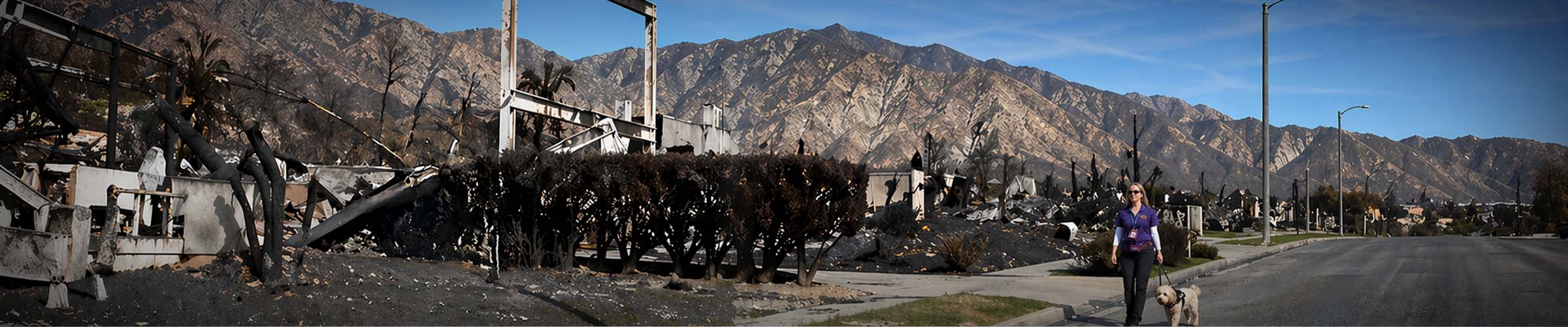
Recovery can take years. The recovery phase of a disaster is a long-term, multi-stage process that transitions from immediate repairs to long-term rebuilding, often lasting months or years. It involves restoring essential services, rebuilding infrastructure, and helping individuals adjust to a "new normal" while addressing emotional, physical, and financial needs. Canines can be effectively utilized during the recovery including such times as anniversary dates or memorials.
Evaluation & Improvement
After the event, organizations conduct after-action reviews, identify strengths and gaps, and update policies and training. These lessons learned feed back into prevention and preparedness — continuing the cycle.
Individual vs. Community Recovery
It is also important to remember that while communities move through operational phases, individuals move through emotional stages such as shock, survival, disillusionment, processing, and eventual integration. Understanding both perspectives allows us to respond with both structure and compassion.